






Understanding Tuning Machines: Types & Replacement Guide
Whether you're upgrading your instrument for better tuning stability or replacing a broken machine head, understanding the mechanical differences and mounting specs will ensure you pick the right drop-in set.
1. Main Types of Tuning Machines
Tuning machines (also known as tuners, tuning pegs, or machine heads) hold string tension and allow precise pitch adjustments. While they all serve the same functional purpose, their internal mechanisms and housing designs differ significantly:
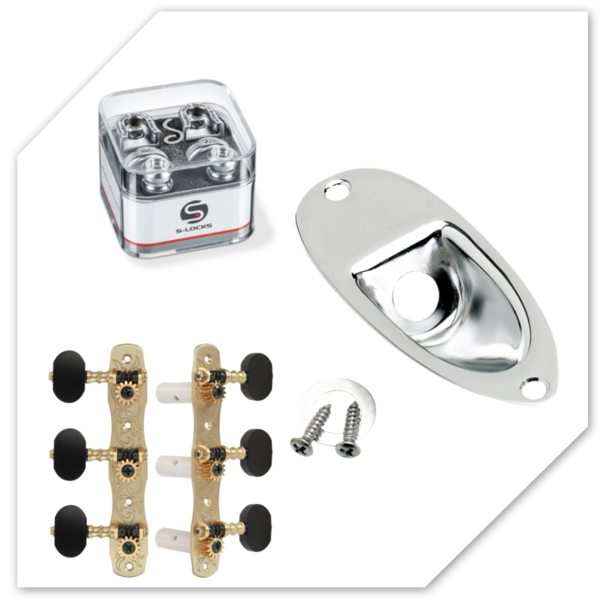
Open-Gear Tuners
Design: The worm and spur gears are fully exposed to the air. These are standard on classical guitars, vintage acoustic guitars, and vintage-style electrics.
- Pros: Lightweight design prevents top-heavy neck dive; classic vintage aesthetic; easy to clean and manually lubricate.
- Cons: Susceptible to dust, grit, and perspiration, which can accelerate gear wear if not regularly maintained.
Sealed (Die-Cast) Tuners
Design: The internal gears are enclosed inside a cast metal housing filled with permanent lubricant. Found on most modern electric and steel-string acoustic guitars.
- Pros: Completely maintenance-free; fully protected from dirt, dust, and moisture; extremely durable.
- Cons: Heavier than open-gear tuners; cannot be serviced internally if the gear fails.
Locking Tuners
Design: Features an internal threaded pin that clamps the string directly inside the post via a rear thumbwheel mechanism.
- Pros: Drastically speeds up string changes (requires less than one full wrap around the post); significantly improves tuning stability on vibrato/tremolo-equipped guitars.
- Cons: Slightly heavier than standard tuners; carries a higher upfront cost.
2. Key Specifications to Check Before Buying Replacements
To avoid having to drill new screw holes or ream out the tuner holes in your headstock, carefully check these critical specifications before purchasing replacements:
| Feature | Modern Specs | Vintage Specs |
|---|---|---|
| Peghole Diameter | 10mm (13/32") hole with threaded hex bushing & washer | 8.5mm – 8.8mm (11/32") hole with press-fit push bushings |
| Mounting Method | Screwless dual-pin / single-pin or 45° rear screw hole | 180° top/bottom rear screw holes or contiguous strip plates |
| Gear Ratio Range | 18:1 to 21:1 (finer micro-tuning control) | 12:1 to 15:1 (faster string winding) |
Crucial Compatibility Factors:
- Peghole Bore Size: If you install vintage 8.5mm tuners into modern 10mm headstock holes, you will need adapter/conversion bushings to bridge the gap. Conversely, installing modern 10mm tuners into vintage holes requires enlarging the holes with a reamer.
- Rear Mounting Hole / Pin Layout: Look at the back of your current tuners. Check whether they use single screws (at 45° or 90° angles), two screws (180°), or hidden indexing pins (common on modern Fender guitars).
- Headstock Layout: Ensure you buy the correct orientation:
- 6-In-Line: All tuners mounted on one side (standard Strat/Tele style).
- 3x3 (3 Left / 3 Right): Tuners split across both sides (Gibson/Acoustic style).
- Staggered Post Heights: Used on non-angled headstocks to eliminate the need for string trees by lowering post height towards the tip.